
Ribbed Ceramic Insulator
Ribs extend creepage distance to prevent high-voltage flashover and leakage.
CONSTRUCTION & FEATURES
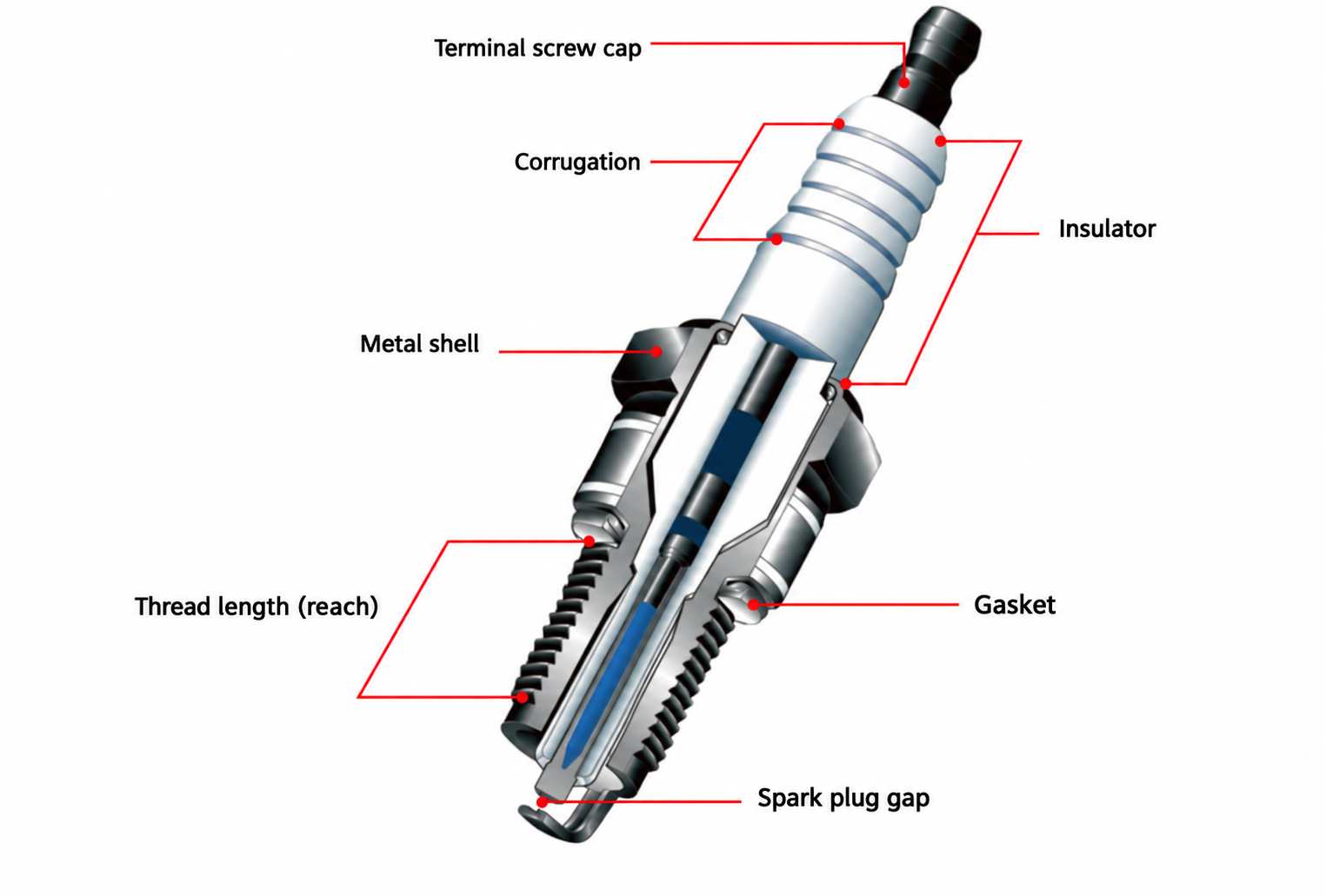
Ribs extend creepage distance to prevent high-voltage flashover and leakage.
Secures spark plug to cylinder head, provides grounding and heat dissipation.
Offers high voltage insulation and reliable resistance to high temperature and thermal shock.
Creates an airtight seal between spark plug and cylinder head to avoid gas leakage.
Reduces radio interference and stabilizes firing end temperature for proper heat range.
HEAT RANGE
HEAT RANGE EXPLAINED
Heat range describes heat transfer from the firing end to the engine. It is not a measure of spark strength.
Select the heat range specified for the engine. Hotter or colder does not automatically mean better.
THERMAL BEHAVIOUR
The firing end must reach a suitable operating temperature to limit deposits while avoiding overheating. Engine load, plug design and heat transfer all affect its temperature.
Operating temperature depends on the engine, load and plug design. Use the vehicle manufacturer’s specified plug and service guidance.
KNOW YOUR SPARK PLUG
BEFORE REPLACEMENT
Follow the vehicle manufacturer’s service schedule. Replacement timing depends on the specified plug, engine condition and operating environment.
WHEN TO INSPECT
| Check | What to review |
|---|---|
| Service interval | Vehicle maintenance schedule |
| Electrode condition | Wear, deposits and visible damage |
| Insulator condition | Cracks, damage or contamination |
| Replacement specification | Model, thread, reach, seat and heat range |
| Installation | Engine-specific fitting instructions |
Consult a qualified technician if you notice misfiring, difficult starting or other changes in engine operation.
Compare common electrode designs across spark plug ranges. Availability and specification depend on the selected model.
Classic nickel alloy electrode for general engines, stable and cost-effective.
V-shaped notch on center electrode reduces flame quenching for better ignition.
Platinum tip delivers outstanding wear resistance and longer service life.
Ultra-fine iridium tip requires lower ignition voltage for reliable firing.
Fine tips on both center and ground electrodes for superior ignitability.
Projected square platinum electrode optimized for turbo and high-heat engines.
Multi-side electrode design offers reliable backup spark and stable combustion.
CONDITION & CAUSES
Compare the firing end with these reference photos and review possible causes with a technician.
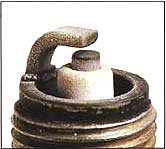
Consistent with normal operating temperature.
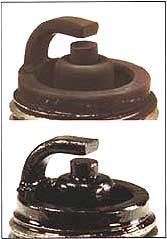
Possible rich mixture or unsuitable cold heat range.
Possible oil-control problems or excessive fuel. Identify the liquid.
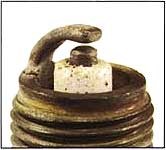
Excessive heat can glaze deposits.
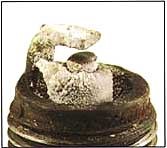
Oil leakage, fuel quality and operating time can contribute.
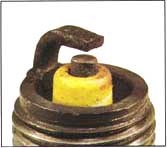
Lead compounds can affect insulation.
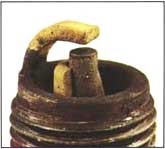
Sudden temperature changes can cause thermal shock.
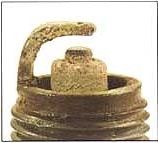
Erosion increases ignition voltage demand.
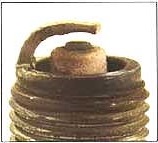
Corrosion, oxidation or chemical reactions may contribute.
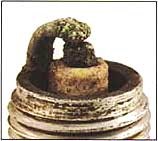
Severe overheating can melt electrode material.
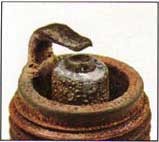
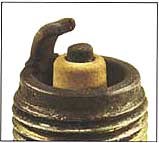
Oxidation or lead compounds may damage surfaces.